India
Official Name: Republic of India (Bhārat Gaṇarājya)
Location: South Asia
Capital: New Delhi
Largest City: Mumbai
Geography:
- Seventh-largest country in the world by area (3.287 million km²).
- Borders: Pakistan (west), China, Nepal, Bhutan (north), Bangladesh and Myanmar (east).
- Surrounded by the Indian Ocean, Arabian Sea, and Bay of Bengal.
Population:
- Over 1.4 billion (2025), the most populous country in the world.
- Diverse ethnic, linguistic, and religious groups.
Languages:
- Constitution recognizes 22 official languages.
- Hindi (widely spoken), English (associate official language).
Government:
- Federal parliamentary democratic republic.
- President: Head of state.
- Prime Minister: Head of government.
- Bicameral legislature: Lok Sabha (House of the People) and Rajya Sabha (Council of States).
Economy:
- Fifth-largest economy (nominal GDP).
- Major sectors: IT services, agriculture, manufacturing, pharmaceuticals, textiles, space research.
- Part of G20, BRICS, and WTO.
History:
- Ancient Indus Valley Civilization (c. 2500 BCE).
- Long history of empires: Maurya, Gupta, Mughal.
- British colonial rule (18th–20th century).
- Gained independence on 15 August 1947.
- Became a republic on 26 January 1950.
Culture:
- Rich heritage in philosophy, art, music, dance, architecture, and literature.
- Birthplace of Hinduism, Buddhism, Jainism, Sikhism.
- Festivals: Diwali, Holi, Eid, Christmas, Pongal, Onam, Baisakhi, Durga Puja.
- Cuisine varies by region; famous for spices and diverse vegetarian/non-vegetarian dishes.
Symbols:
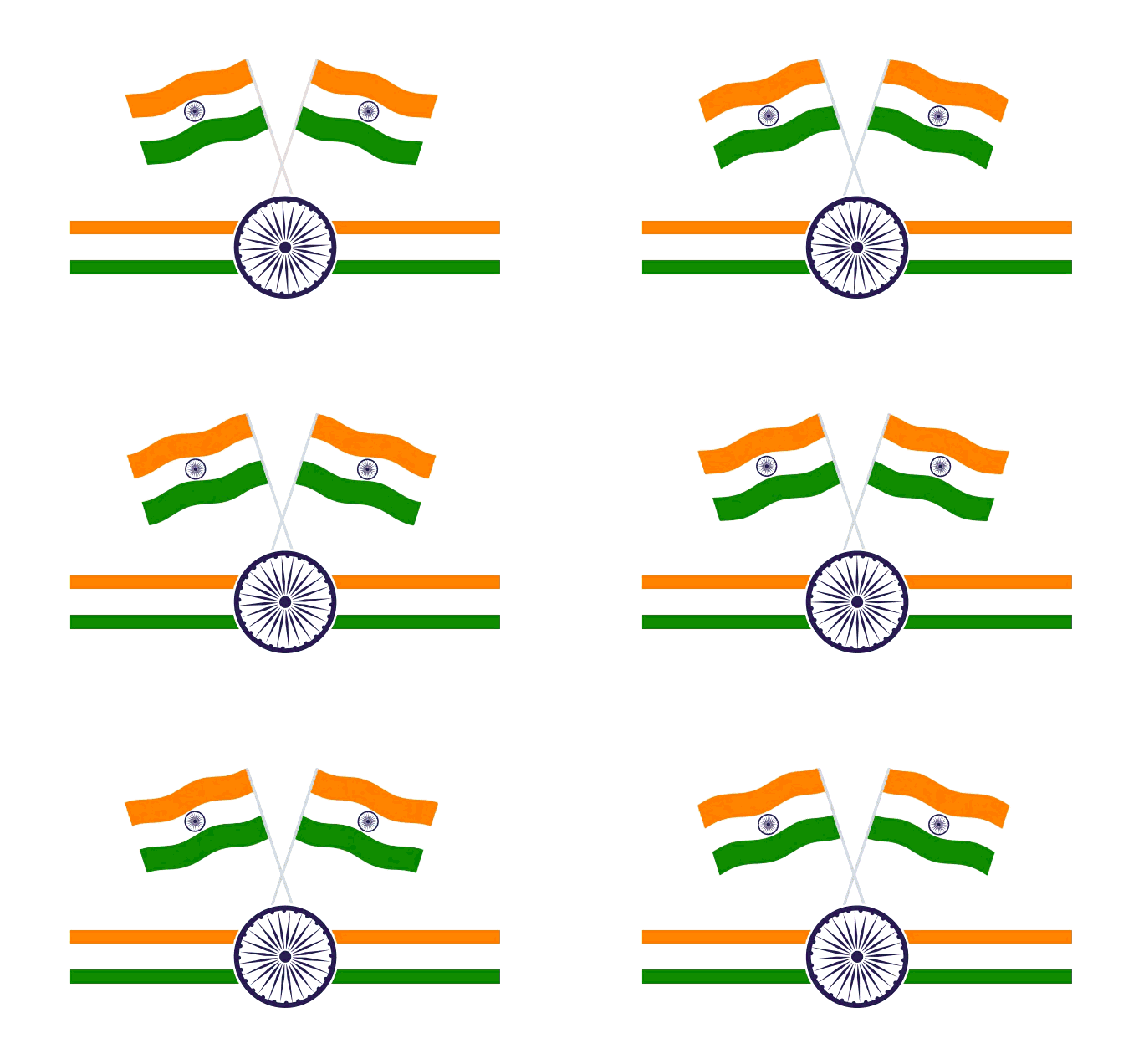
- National Flag: Tricolour (saffron, white, green) with Ashoka Chakra.
- National Anthem: “Jana Gana Mana.”
- National Animal: Bengal Tiger.
- National Bird: Indian Peacock.
- National Sport (de facto): Cricket (officially, field hockey is the national game).